Casement window restoration and repair
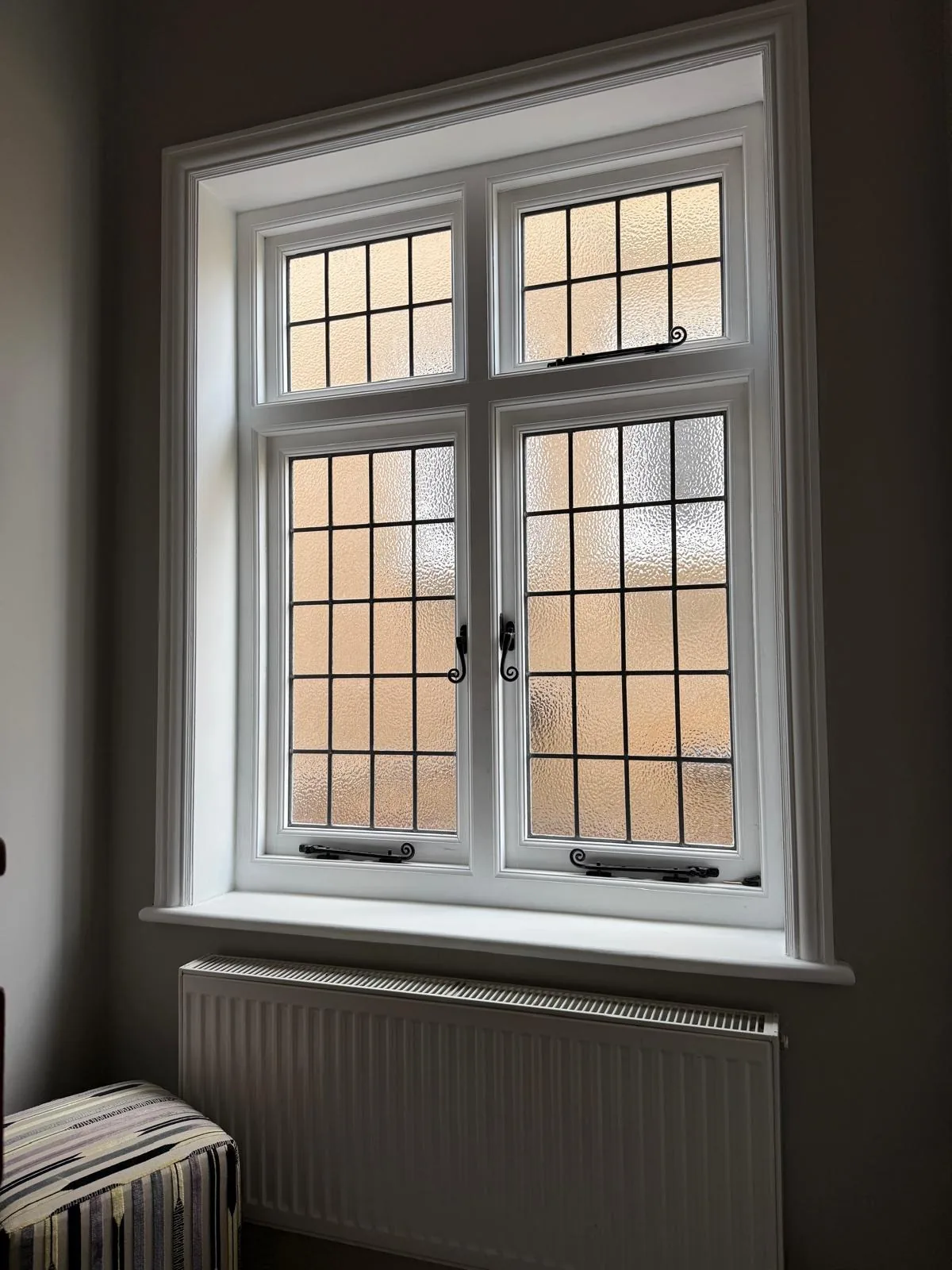
A casement window is hinged at the side rather than hung on cords, and it fails differently from a sash: the hinges drop, the frame racks, and the opening light stops meeting the rebate.
We restore timber casements in period and listed homes across London, splicing out rot, renewing hinges and stays, repairing leaded and stained lights, and draught-proofing with compression seals.
London · Casement windowsWritten quotationsA studio of The Barnsbury Group, established 1980
What we do
- 01Remove the opening lights and protect the room.
- 02Strip failed paint and putty and assess the timber.
- 03Cut out rot and splice in new timber, matched to the section.
- 04Renew hinges, stays and fasteners with period-correct ironmongery, and rehang so the light closes square.
- 05Repair the frame where it has racked, and ease the rebate.
- 06Reglaze with like-for-like glass, including leaded and stained lights where they survive.
- 07Fit compression seals so the window closes tight without binding.
- 08Prime, undercoat and hand-paint, or leave keyed for your decorator.
Access
Casements open outwards, so unlike sash windows they cannot be worked on from inside the room. Ground-floor windows are usually reachable from a ladder or a low tower. Upper floors need a tower or scaffold, which we arrange and quote for as part of the job. We tell you at the survey what access your windows will need, so it is in the quotation rather than added later.
Where we find them
Casements are common in Edwardian and Arts and Crafts houses, in the later streets of Highgate, Wandsworth and Walthamstow, in mews and cottages, and at the backs of houses whose fronts are sashes. Many London houses have both, and we do them together.
Draught-proofing a casement
Casements take compression seals rather than the brush seals used on sashes, because the light closes against the frame instead of sliding past it. The seal is set into a routed groove so nothing is visible when the window is shut, and the window still closes on its original ironmongery.
Leaded and stained lights
Where a casement holds leaded or stained glass, the lead itself eventually sags and the panel bows. We repair and relead panels rather than replacing them, and keep the original glass.
What it does not fix
A frame that has rotted through at the cill and jamb is a replacement job, and the replacement is made to the original section by Barnsbury Joinery.
Common questions
Do you restore casement windows as well as sash windows?01
Yes. The approach is the same, though a casement fails at its hinges and rebate rather than its cords and beads.
Can casement windows be draught-proofed?02
Yes, with compression seals set into the frame. Nothing is visible when the window is closed.
Can you repair the leaded lights in my casements?03
Where the lead has sagged or a panel has bowed, yes. We repair and relead rather than replace.
Can you match a casement to the rest of the house?04
Where a new light is needed it is made to the original section, moulding and glazing pattern.
Do you need scaffolding to repair casement windows?05
Usually on upper floors, because casements open outwards and cannot be reached from inside. Ground-floor windows are often done from a ladder or a low tower. We confirm what is needed at the survey and include it in the quotation.
Book a survey
Send us photographs of your windows and we'll tell you what needs doing and what doesn't, with a written quotation. The digital survey is free.