Timber door restoration and repair
A period front door is usually worth saving.
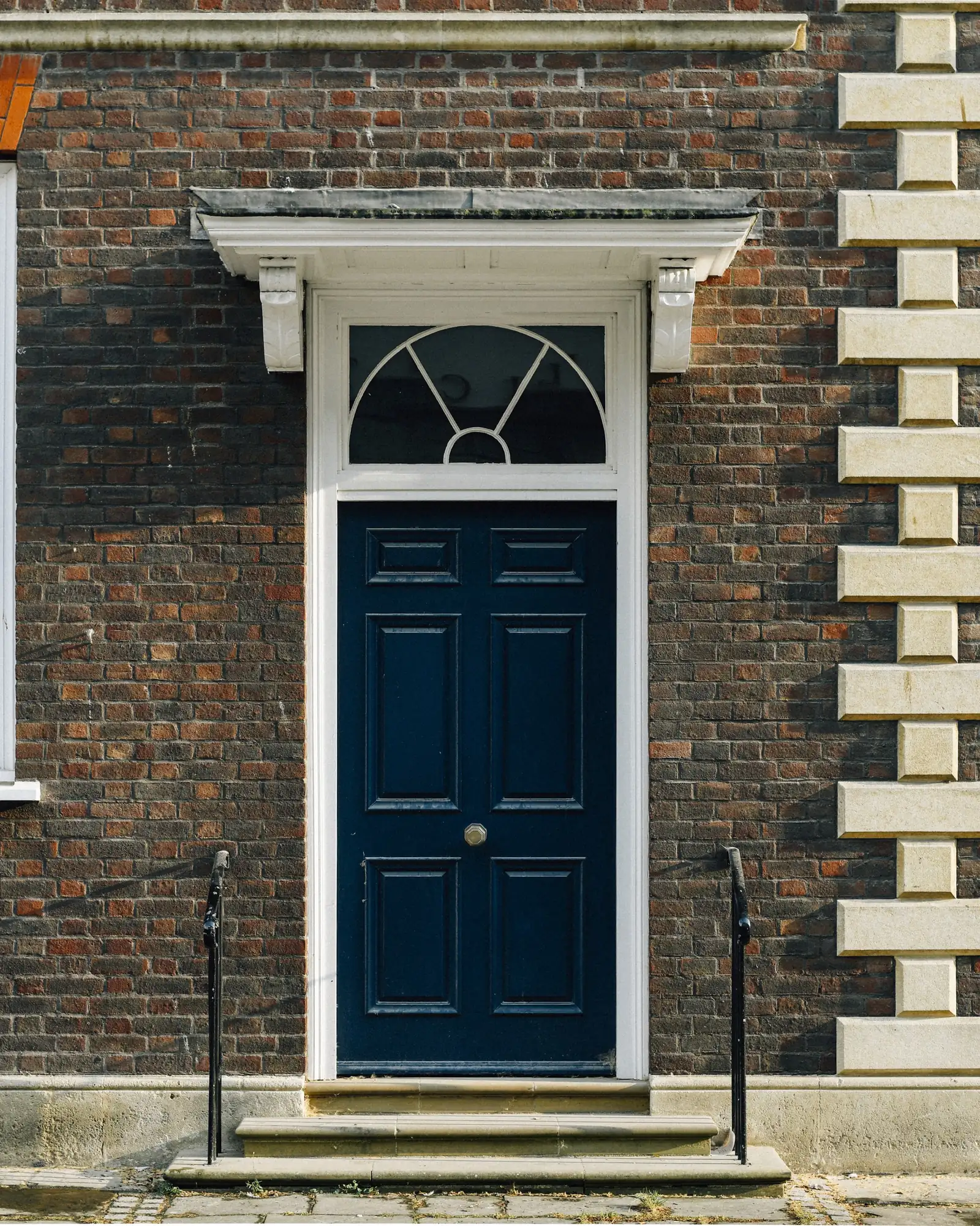
The timber is better than anything sold today, and the panels, mouldings and fanlight are part of what the street looks like. We cut out rot, repair split panels, ease and rehang doors that have dropped, renew ironmongery, repair fanlights and stained glass, and draught-proof so the door closes tight. Where a door has already been lost, we make a new one to the original pattern.
London · DoorsWritten quotationsA studio of The Barnsbury Group, established 1980
Front doors
The bottom rail goes first, because it sits in the weather and behind a threshold that holds water. We cut it out and splice in new timber rather than replacing the door. Above that the common faults are split or shrunken panels, a door that has dropped on its hinges and binds on the frame, failed putty around the glazing, and ironmongery that has been replaced piecemeal over a century. We repair the frame and threshold at the same time, because a sound door in a rotten frame still lets in water.
Internal doors
Panelled internal doors suffer from paint more than weather: decades of build-up loses the moulding detail, hinges seize, and doors that were planed to fit a settled opening no longer close. We strip back where the detail has gone, repair and rehang, and refinish to match the room's joinery. Where a Victorian house has lost its original doors to flush replacements, we make new panelled doors to the pattern of whatever survives.
Fanlights, glazing and stained glass
Many London front doors have a fanlight above and glazed panels within. We reglaze like for like, repair and relead stained and leaded panels where they survive, and fit toughened or laminated glass where building regulations require it in a door or a low-level panel. Original glass is kept wherever it is sound, and a cracked pane in an original fanlight is worth repairing rather than replacing.
Draught-proofing doors
A front door is the other large draught in a period house, and it is sealed differently from a sash window: compression seals in the frame, a brush or drop seal at the threshold, and the letterplate and keyhole dealt with separately. We fit this while the door is off for repair, so the door is hung once.
New doors made to match
Where a door is beyond repair or has already been replaced with something poor, we make a new one to the original pattern: the same panel arrangement, the same mouldings, the same glazing. These are made by Barnsbury Joinery, our group's manufacturing studio, and fitted by the team that surveyed the opening. In a conservation area a like-for-like timber door usually needs no consent; in a listed building it almost always does. Where an application needs drawings, we can prepare them. That is separate work and we quote for it.
What it does not fix
A door frame rotted through at both jambs and the threshold is a frame replacement, quoted separately. A modern flush door cannot be made period by repair; it is replaced.
Common questions
Can my Victorian front door be repaired rather than replaced?01
Usually. Rot is normally confined to the bottom rail and the threshold, and both can be cut out and spliced. The panels and stiles are generally sound.
Do you draught-proof front doors?02
Yes, with compression seals in the frame and a seal at the threshold, fitted while the door is off for repair so it is hung once.
Can you repair the stained glass in my front door?03
Yes. Where the lead has sagged or a panel is cracked we repair and relead rather than replace, and we keep the original glass wherever it is sound.
Can you make a new door to match the others on my street?04
Yes. It is made to the original pattern by Barnsbury Joinery and fitted by our team.
Do I need permission to change my front door?05
In a conservation area, a like-for-like timber door usually needs none. In a listed building it almost always does. Where an application needs drawings, we can prepare them. That is separate work and we quote for it.
Book a survey
Send us photographs of your windows and we'll tell you what needs doing and what doesn't, with a written quotation. The digital survey is free.